Street food is the point, choose stalls wisely
Eat where the line of locals is longest and the meat is cooked in front of you - turnover keeps food fresh. Tacos al pastor at a busy evening stand will likely be the best meal of your trip.
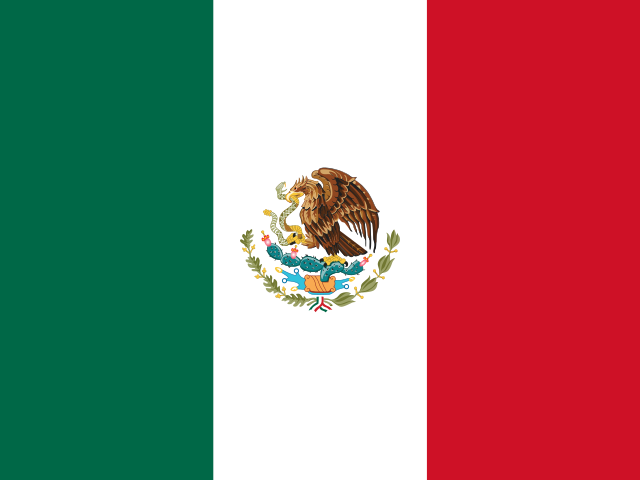
From CDMX to the Yucatan: money, safety basics, transport, when to go, curated traveler tips, and how to stay connected with an eSIM.


Secure, effective and private eSIMs across the globe
Mexico is vast and wildly diverse: the food and museum scene of Mexico City, Mayan ruins rising out of Yucatan jungle, Oaxacan mezcal and mole, Pacific surf towns and the cenote-dotted Riviera Maya.
Most trips are far safer and easier than headlines suggest, provided you treat it like any big country: pick your regions, use registered taxis or rideshare apps, and enjoy the fact that Mexicans are among the most welcoming hosts anywhere.
The food is the trip. Street tacos in Mexico City, mole in Oaxaca, cochinita in the Yucatan, and a plastic-chair seafood shack on the Pacific will outdo most sit-down restaurants you have been saving for. Follow the queue, eat the salsa, and leave room for a second stall.
Pick a lane: city-and-food, ruins-and-cenotes, or beach-and-surf. Mixing all three is possible, but only if you fly the long hops. Mexico is huge, proud and much warmer than the headlines. Stay curious and you will be taken care of.
Essentials
Traveler tips
Real advice from people who have been to Mexico, curated by our team with links to the original sources.
Eat where the line of locals is longest and the meat is cooked in front of you - turnover keeps food fresh. Tacos al pastor at a busy evening stand will likely be the best meal of your trip.
In cities with Uber, it is the simplest and safest way around, with no fare negotiation. At airports, buy a fixed-price taxi voucher inside the terminal instead of accepting offers outside.
Breaking a 500-peso note at a market stall or taxi is a constant struggle. Ask for smaller denominations at ATMs when possible and hoard coins and 20s for tips and street food.
CDMX sits at 2,200 meters. Take it easy on arrival, drink more water than you think, and save the mezcal crawl for night two. The headache people blame on last night is often just the elevation.
Use bank-lobby machines, decline the machine's conversion rate, and let your own bank do the exchange. Street ATMs and 'helpful' conversion screens are how tourists lose a quiet 10 percent.
TripAdvisor Forums
Households and restaurants drink from big jugs or filtered systems, not the tap. Ice in tourist restaurants is usually from that supply; still ask if you want to be sure.
View sourceTripAdvisor Forums
Roma Norte and Condesa are the walkable evening neighbourhoods with parks and restaurants. Centro Histórico heaves all day and empties after dark, so use it as a daytime wander from a leafy base.
View sourceTripAdvisor Forums
Use a debit card at a machine inside a bank — Banorte and Santander come up often — and refuse the machine’s own exchange rate so your home bank converts. Street ATMs and HSBC boxes are the ones people regret. Ask for 50- and 100-peso notes if the screen lets you; a 500 is hard to break at a taco stand. Toilets still want a coin.
View sourceTripAdvisor Forums
The app charges Mexican pesos and your bank converts later. That is not a dollar fare. At AICM, ride-hail drivers are not allowed to collect you in the federal zone — you walk out and request from the street, or you buy an official sitio taxi ticket inside. Have data before you land. Paying a restaurant in US dollars is how you eat a bad rate.
View sourceFAQ
Yes, if it is unlocked and eSIM-capable - iPhone XS or newer, Pixel 3 or newer, Galaxy S20 or newer. Travel eSIMs connect to Mexico's major networks, the same ones behind local prepaid SIMs.
Uber, maps, translation and WhatsApp - which all of Mexico runs on - use about 1-2 GB per day for most travelers. A 10-15 GB plan covers a typical one- to two-week trip; add more if you hotspot at the beach.
Cancun, the Riviera Maya, Tulum and the main Yucatan towns have solid 4G coverage. Signal thins out at remote cenotes, in the jungle around lesser-visited ruins and on stretches of highway between towns, so download offline maps for day trips.
Airport kiosks in Cancun and Mexico City are convenient but charge tourist prices, and the arrivals halls are hectic. An eSIM set up before you fly costs less and has you requesting an Uber while others are still queuing.
Resort Wi-Fi is fine at the pool, but it does not book your colectivo route, navigate you to a cenote or keep WhatsApp working on a day trip. Mobile data is what keeps the practical side of a Mexico trip running once you leave the lobby.
eSIM plans
Rideshare apps, bus bookings and translation tools all want data, and resort Wi-Fi rarely follows you to the cenotes. A Mexico eSIM is cheaper than roaming, activates instantly, and keeps you reachable from CDMX to the coast.
WhatsApp is how Mexico confirms everything — rooms, tours, the guy with the boat. An eSIM keeps that thread alive from the airport to the last cenote, which is worth more than any resort Wi-Fi password.